PSPK
PSPK
 0
0


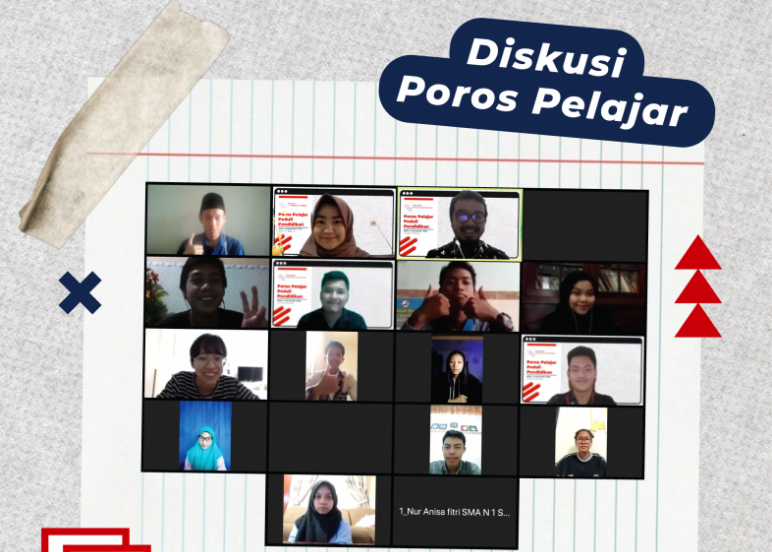
The Center for Education and Policy Studies (PSPK) held the Poros Pelajar Peduli Pendidikan (Student Axis for Education Advocacy) activity on Saturday (14/11). Poros Pelajar Peduli Pendidikan is a Focus Group Discussion (FGD) initiated by PSPK in collaboration with Indonesian students who have strong aspirations and concern for education. This discussion is intended to serve as a platform for students to voice their opinions, ideas, and policy recommendations, as well as to share information on the current state of education in Indonesia as seen from children’s perspectives—particularly students at the senior secondary school level and its equivalents.
The discussion was attended by students from 18 cities and regencies across Indonesia, spanning from Takengon to Merauke, and from Nunukan to Maumere. This geographical diversity aimed to capture a broad picture of the current educational conditions in various regions of Indonesia. The participating students also came from diverse backgrounds, including student activists, young researchers, and initiators of innovation and creativity. These varied backgrounds were expected to enrich the discussion by bringing wider perspectives to the topics addressed.
The discussion focused on several key issues, particularly curriculum and assessment. These two aspects represent major education policies whose impacts are directly experienced by students. Through this initiative, PSPK seeks to encourage student participation and ensure that students are not merely treated as objects of education, but as active participants in shaping it.
“Education policies so far have often tended to favor interests other than those of children. Therefore, PSPK feels it is essential to listen directly to the voices of Indonesian children. Today marks the first time we have held a forum like this with students, and we plan to organize similar forums regularly. Today we will discuss curriculum and assessment. This activity aims to gather information, perspectives, ideas, and proposals from senior secondary school students and their equivalents, which we will then convey to policymakers,” said Nisa Felicia, Executive Director of PSPK.
The outcomes of the discussion were concrete and highly feasible to implement. Participants emphasized the importance of student involvement in curriculum design, so that curricula better reflect students’ interests, talents, and needs. There was also a shared view that assessment should not focus solely on grades as the primary measure of student ability. In addition, many students expressed concerns about overly complex systems that make it difficult for teachers to deliver learning materials effectively. As a solution, they proposed establishing communication forums between teachers and students to further support student engagement in their respective schools.
The discussion was lively and dynamic. Activities like this are expected to continue and remain a platform for student aspirations. PSPK is also expected to continue acting as a collaborator and a bridge between students and policymakers. “We are very grateful that this discussion has become a platform for expressing our aspirations regarding education in schools. Here, we not only shared our concerns but also found common ground. We hope PSPK will continue to be present and serve as a bridge for the aspirations of Indonesian children,” said one of the student representatives.
The students expressed strong hope that their voices would be heard by policymakers and taken into consideration in future policy decisions. The Center for Education and Policy Studies (PSPK) will strive to act not only as a listener, but also as a conduit for amplifying students’ voices, in an effort to make Indonesian education more genuinely child-centered.