PSPK
PSPK
 0
0



As one of the levels of government closest to the community, the role of subdistrict governments is highly anticipated by the public. There are at least five potential roles that subdistricts can play to accelerate development, both in terms of infrastructure and human development, including in the field of education. One indication of this potential can be seen in the distribution of primary schools (SD/equivalent) and junior secondary schools (SMP/equivalent), which are present in almost all subdistricts across Indonesia.
When referring to participation indicators such as the Gross Enrollment Rate (GER) and the Net Enrollment Rate (NER), the figures appear to be very high. In 2019, the NER for junior secondary education reached 77.21 percent, while at the primary level it reached as high as 92.88 percent. However, despite these high participation rates, educational outcomes can still be considered far from satisfactory. For instance, the results of the 2019 Junior Secondary National Examination showed that more than 50 percent of students scored below the national average. This indicates that even when the National Examination was still used as a graduation requirement, high graduation rates did not necessarily correspond to good educational quality.
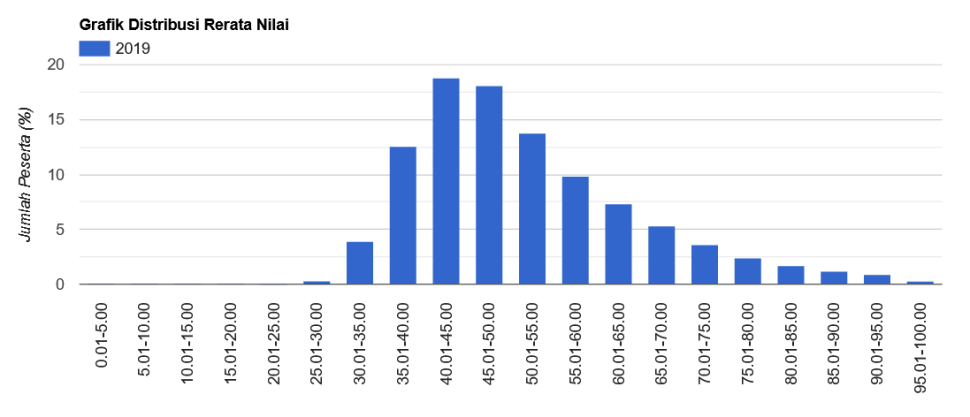
Subdistricts, as part of local government apparatus with strong territorial characteristics, play a crucial role in bridging interests both horizontally—among service delivery units—and vertically, particularly in relations with communities and relevant government agencies.
In response to these challenges, various programs aimed at fulfilling the availability of certified teachers have often been implemented. However, the presence of certified teachers has not yet succeeded in significantly improving the quality of education. Teachers are also frequently absent from teaching activities due to the burden of administrative requirements.
The equitable distribution of teachers remains a persistent issue. Disparities in infrastructure across regions are among the factors that lead teachers to prefer teaching in areas closer to urban centers.
Producing high-quality graduates requires not only competent educators but also consistent supervision. Therefore, the delegation of authority to subdistrict governments is intended to strengthen their role in promoting more efficient delivery of educational services.
There are several roles that subdistrict governments can optimize to support the effective delivery of basic education services:
This article is a summary of discussions from Simpul. All statements that do not refer to external sources are derived from the discussions among Simpul participants.
Simpul is a forum initiated by four research and policy advocacy institutions in Indonesia: PSPK, SMERU, Akatiga, and Article 33. Simpul aims to strengthen the education research ecosystem, serve as a platform for sharing strategies and methods for education policy advocacy, and facilitate the exchange of updates on the implementation of education policies.