PSPK
PSPK
 0
0


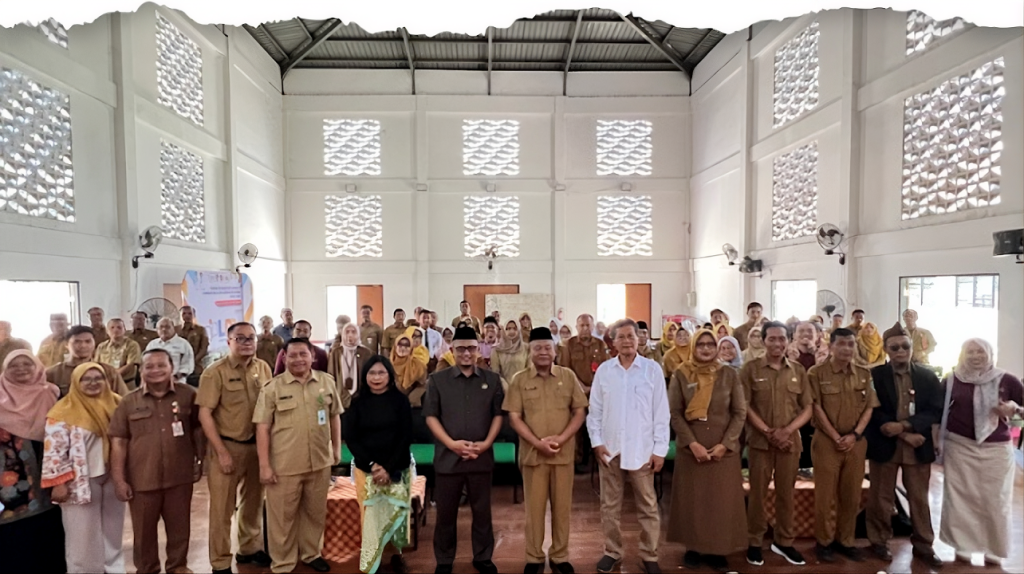
On September 23–25, 2025, Lingkar Daerah Belajar in collaboration with the Kediri Regency Education Office organized the Education Forum and Learning Circle under the theme “Education’s Response to the Opportunities and Challenges of the Digital Era: Creating Safe Learning Spaces for Children in Kediri.” The event served as a collaborative platform for stakeholders to exchange perspectives and jointly develop solutions to educational challenges in the digital age.
Children in Kediri, like those in many other regions across Indonesia, are growing up in an environment increasingly shaped by digital technology. While these developments offer significant opportunities to expand access to and improve the quality of learning, they also present new risks, ranging from exposure to harmful content to gaps in digital literacy. This forum aimed to bring together key stakeholders to formulate strategic responses to these challenges, particularly at the local level.
The Kediri Education Forum convened key actors, including the Head of the Kediri Regency Education Office, Commission IV of the Kediri Regency Regional House of Representatives (DPRD), the Education Council, the Regional Development Planning Agency (Bappeda), the Communication and Information Office, as well as representatives of teachers and children from across the regency. The event opened with a presentation on Kediri’s education ecosystem and digital-era challenges by Mokhamat Muhsin, Head of the Kediri Regency Education Office.
The discussion continued in a talk show format exploring how the digital era affects children’s development, policy responses at both national and local levels, and the roles of schools and parents in ensuring safe learning environments. In addition to representatives from Kediri’s local government agencies, the session featured speakers Yeremia Dwi Hendryanto from PSPK and Siti Nur Andini from KeluargaKita.
Following the talk show, participants engaged in Focus Group Discussions (FGDs) to reflect on good practices already implemented in schools and communities, while also identifying persistent challenges. These discussions aimed to clarify the roles of different stakeholders and the policy support needed to make efforts to create safe learning spaces for children more effective and sustainable.
Alongside the forum, a series of Learning Circle sessions brought together 120 teachers and school principals from across Kediri Regency. These sessions were delivered through five parallel classes on the following themes: policies to support children’s development in the digital era; deep learning; coding and artificial intelligence in education; the Teacher Learning Modules; and parenting in the digital era. These classes were designed to strengthen educators’ capacity to create safe, relevant, and adaptive learning environments.
The Learning Circles functioned not only as spaces for knowledge transfer, but also as platforms for peer learning among teachers. Through discussions, hands-on practice, and the sharing of strategies, participants strengthened their capacity to deliver more inclusive, responsive, and safe learning experiences in the digital age.
The Education Forum and Learning Circle in Kediri demonstrated that creating safe learning spaces for children in the digital era cannot be achieved in isolation. Cross-sector collaboration, strengthened teacher capacity, policy support, and meaningful parental engagement are essential. From this collective effort emerges the hope that Kediri can become a model for how education systems respond wisely and sustainably to both the opportunities and challenges of the digital era.