PSPK
PSPK
 0
0


By Nisa Felicia, Executive Director of PSPK
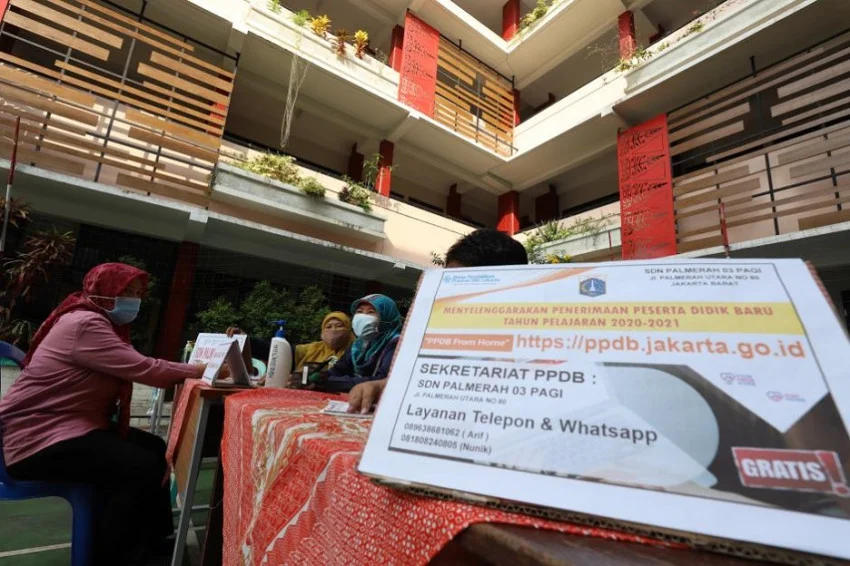
From year to year, the New Student Admission System (Penerimaan Peserta Didik Baru / PPDB) has consistently generated controversy. Last year, protests emerged when the new PPDB policy in DKI Jakarta was first implemented, marking a significant shift in which academic achievement was no longer the dominant selection criterion. Instead, domicile and age of prospective students became key criteria for admission through the Zoning Track.
The 2021–2022 PPDB cycle in DKI Jakarta has again triggered negative responses. The use of age as a selection criterion under the Zoning Track has been criticized for allegedly violating the right of younger children to access education. Meanwhile, the Achievement Track has raised questions following the abolition of the National Examination (Ujian Nasional), which had previously served as a standardized benchmark for assessing student achievement.
Every year, selection criteria dominate discussions around PPDB. Yet, there is a more fundamental question that deserves attention: Why must admission be so competitive in the first place?
The recurring PPDB problem stems from the government’s unfinished effort to ensure access to high-quality and affordable education for all residents of DKI Jakarta, despite the national commitment to 12 years of compulsory education. Data from the 2020–2021 academic year show that public junior high schools (SMP Negeri) in DKI Jakarta could only accommodate approximately 47.33% of applicants, while access to public senior high schools (SMA Negeri) was even lower—at around 33%. With such limited capacity, strict selection mechanisms become unavoidable due to intense competition.
To date, PPDB policy has focused primarily on regulating who has a greater chance of entering public schools, rather than addressing the core issue: the severe shortage of seats in public senior high schools in DKI Jakarta.
Since the 2020–2021 academic year, PPDB policy in Jakarta has introduced four admission tracks. The Affirmation Track aims to increase access for students from low socio-economic status (SES) backgrounds, who historically have had limited opportunities to attend public senior high schools—or to continue to upper secondary education at all.
The Achievement Track is designed to recognize students’ academic and non-academic accomplishments, allowing them to apply to public schools beyond their immediate residential area. The Zoning Track, in addition to promoting proximity between students and schools, also seeks to create a more random and SES-neutral admission process. This is why distance from domicile and age are used as selection criteria. Finally, the Parental Transfer and Teacher’s Child Track applies criteria consistent with its designation.
The existence of these four tracks means that academic achievement is no longer the sole determinant of admission. Each track applies different criteria, effectively disrupting long-standing patterns of who gains access to public schools and who is relegated to private ones. These patterns were shaped by a meritocratic admission system that has long been perceived as fair—under the assumption that public schools should be accessed primarily by high-achieving students.
However, research consistently shows that students with high academic achievement tend to come from middle- and upper-SES families. These students have greater access to tutoring, private lessons, supplementary learning materials, and higher-quality early childhood and primary education. In short, they enjoy structural advantages that significantly increase their chances of academic success.
When admission relies heavily on academic merit, children from low-SES backgrounds are systematically disadvantaged. This exacerbates educational inequality: the government ends up subsidizing relatively affluent students in public schools, while poorer families must bear the cost of private education.
Recognizing this inequity, DKI Jakarta revised its admission rules beginning in the 2020–2021 academic year. The four-track system was intended to broaden access for groups that had previously been excluded from public schools. Yet, this approach fails to resolve the more fundamental issue: the limited capacity of public senior high schools.
Prior to the recent PPDB controversies, both the government and the public may not have fully grasped the impact of this capacity shortage. This may be due to the long-standing normalization of merit-based selection or the perception that rising enrollment rates signaled adequate access. In reality, high participation rates do not reflect the availability of affordable, quality-controlled public schools for all citizens.
In 2019, the Net Enrollment Rate (Angka Partisipasi Murni) for senior high school in DKI Jakarta stood at 74.77%, meaning that roughly 75 out of every 100 adolescents of high-school age were enrolled. While this exceeds the national average of approximately 60%, it masks a critical reality: about 67% of junior high school graduates in DKI Jakarta must attend private SMA or vocational schools if they continue their education. For many families, private schools are not a choice but a necessity due to limited access to public schools.
No matter how admission criteria are adjusted, the capacity of public senior high schools remains unchanged. The only variable is who gains access. What DKI Jakarta truly needs is to increase capacity—because the government’s obligation is to fulfill the right to education for all residents, not only for the academically high-performing, not only for the poor, and not only for those living near schools.
Given that public schools accommodate only around 33% of demand, modifying selection criteria alone is insufficient. The debate over PPDB criteria has intensified over the past two years, while the capacity shortage itself has persisted for far longer. This issue requires urgent resolution.
Expanding classrooms, increasing class sizes, or adding more student seats within existing public schools are potential policy options. However, these are difficult to implement in Jakarta’s densely populated urban context. Land availability is limited, and student density in existing public schools is already high. Increasing class sizes risks undermining learning quality by raising teacher–student ratios and reducing individual attention.
Another option is to build additional public senior high schools. Currently, 164 urban villages (kelurahan) in DKI Jakarta lack an SMA Negeri. While this option is worth considering, it requires careful alignment with population distribution and land availability. High-demand areas are often densely populated and lack suitable land, while available land may be located in industrial zones with limited demand for schools. As a result, this approach may not provide a short-term solution.
A third and more context-appropriate option is to integrate private senior high schools into the PPDB system. This would expand total capacity by allocating publicly subsidized seats within selected private schools. The government’s core responsibility is to ensure access to quality and affordable education, regardless of whether the school is public or private.
This approach is supported by Regulation of the Minister of Education and Culture No. 1 of 2021, which allows local governments to involve community-run (private) schools in PPDB implementation.
Not all private schools should be included. Given the wide variation in quality, only private schools with service standards comparable to public SMA Negeri should participate. Students admitted to these schools should receive full subsidies for enrollment fees and monthly tuition for the full three years of study, ensuring equitable access.
Private schools—particularly low-fee private schools—have long played a vital role in expanding educational access in developing countries, including Indonesia. In the 2019–2020 academic year, approximately 75% of senior high schools in DKI Jakarta were private, enrolling nearly 47% of students. Ignoring their role would be a strategic mistake.
Collaboration with private schools should not be misconstrued as privatization. Rather, it represents a child-centered policy approach that recognizes community participation as a partner, not a competitor, in delivering education.
PPDB is merely an entry point toward equitable educational opportunities. On its own, it cannot ensure equal chances of academic success for all children. While PPDB addresses access at the input level, it must be complemented by policies that remove structural barriers within the learning process—especially those that implicitly disadvantage certain social groups.
True educational equity requires a comprehensive policy framework that is responsive to students’ diverse socio-cultural backgrounds and learning needs. The recent PPDB debates have illuminated a long-standing issue: the chronic shortage of public senior high schools in DKI Jakarta. This problem predates the zoning system and has persisted for many years—yet remained largely unquestioned when merit-based selection dominated admissions.
Thus, solutions must go beyond adjusting selection criteria. Expanding public education capacity is imperative, and policy choices must be tailored to local contexts. For DKI Jakarta, integrating private schools into the PPDB system represents a pragmatic and equity-oriented policy option for the 2021–2022 academic year.